
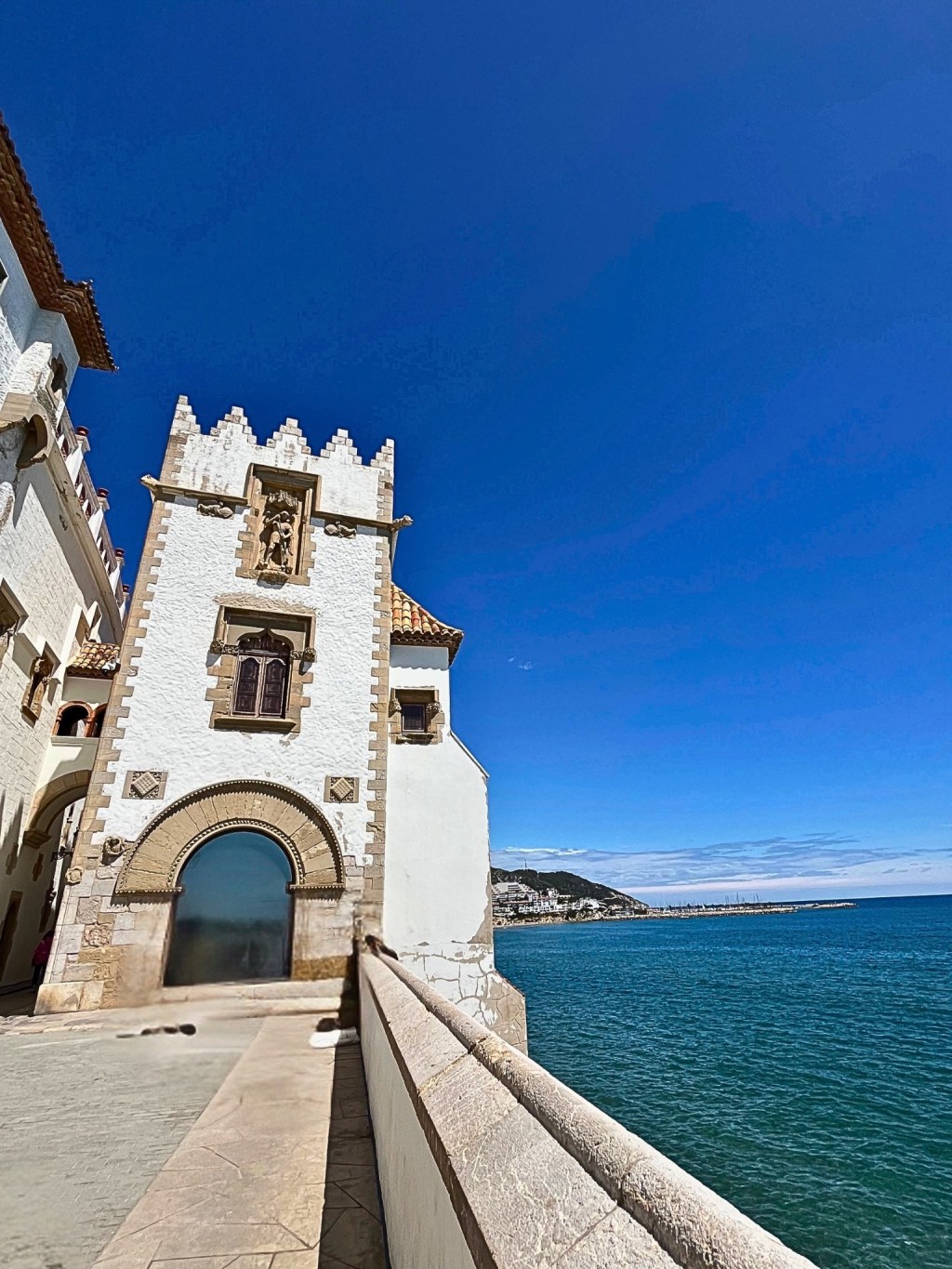
You don’t expect to find a palace tucked between the sea and a quiet street. But in Sitges, surprises come gently. I turned a corner, and there it was—Palau Maricel, glowing in the midday light like it had always belonged to this place.
Its story begins in the early 1900s, when Charles Deering, a wealthy American art collector, fell in love with Sitges. Alongside Catalan artist and engineer Miquel Utrillo, he transformed a row of fishermen’s houses into a sanctuary for beauty. Inspired by the ideals of Noucentisme—a Catalan movement that embraced classical harmony and Mediterranean calm—Palau Maricel became a space where art, architecture, and the sea could speak to one another.
Even from the outside, the building whispers stories. Stone arches frame glimpses of light, iron balconies overlook the water, and the entire façade seems to breathe with quiet elegance. It holds centuries of influence—Gothic, Renaissance, Baroque—but somehow remains rooted in its own, singular grace.
And as I stood there, I felt it again: wondering is enough. You don’t always need explanations or entry. Beauty, after all, isn’t always kept behind doors—it often lives in what we’re willing to notice.

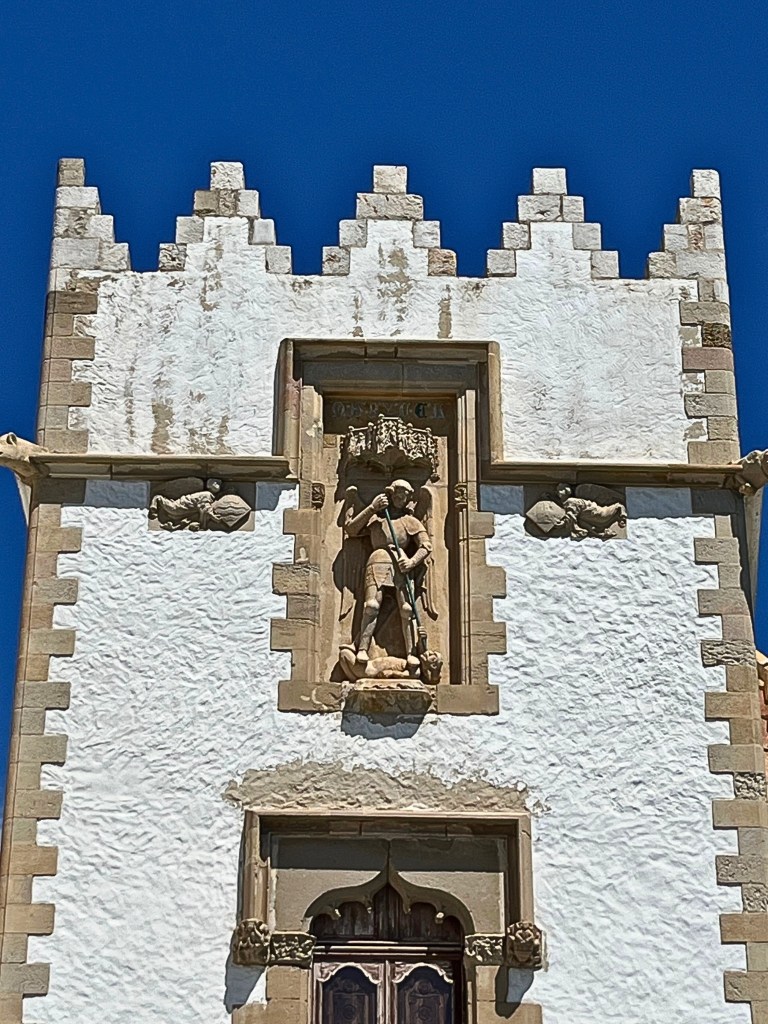
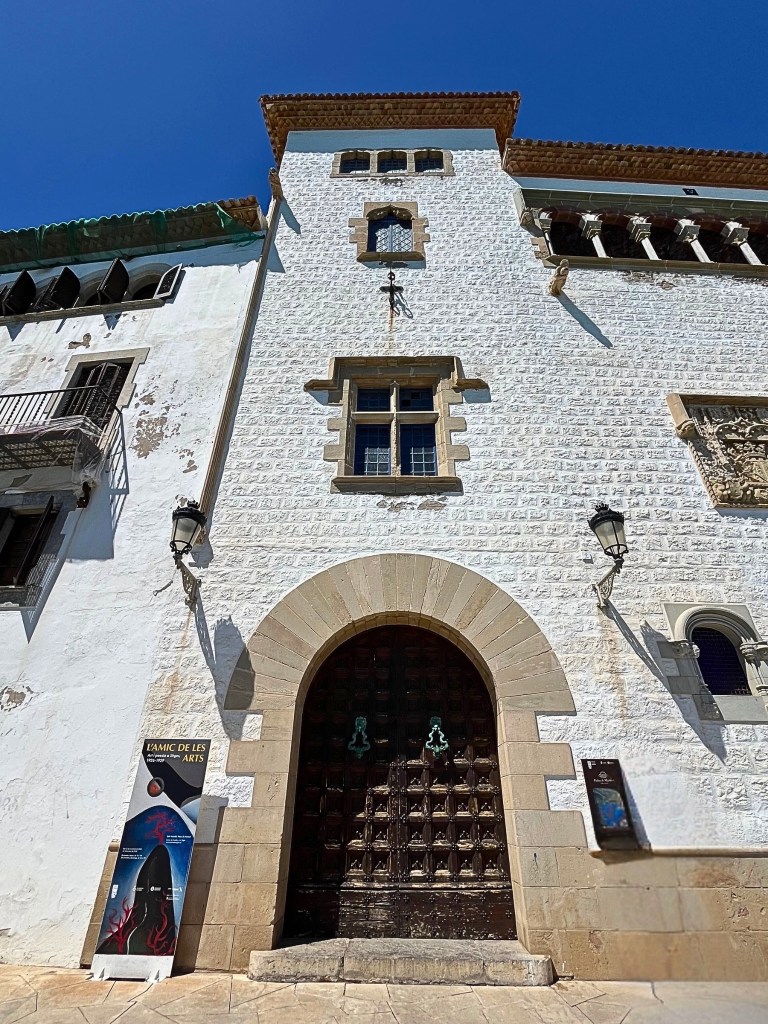
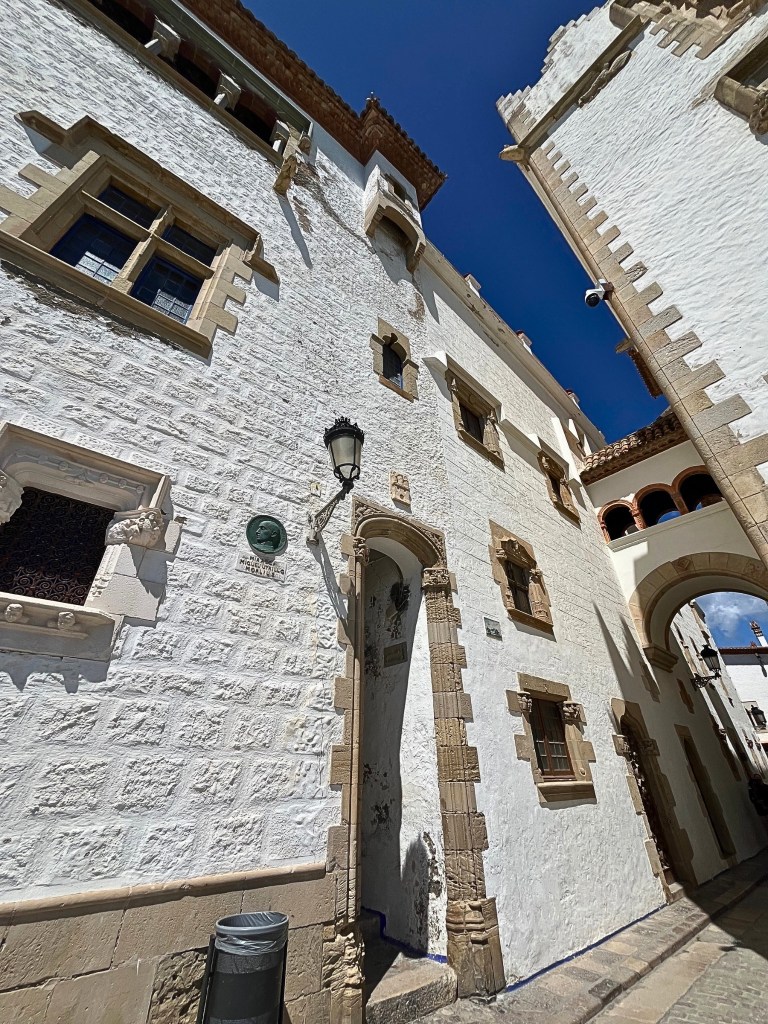

On April 27th, we visited Sitges during our stay in Barcelona, discovering the architectural charm of Palau Maricel. Come explore Spain with us—its rich culture, history, and the beauty of this stunning museum by the sea.
