
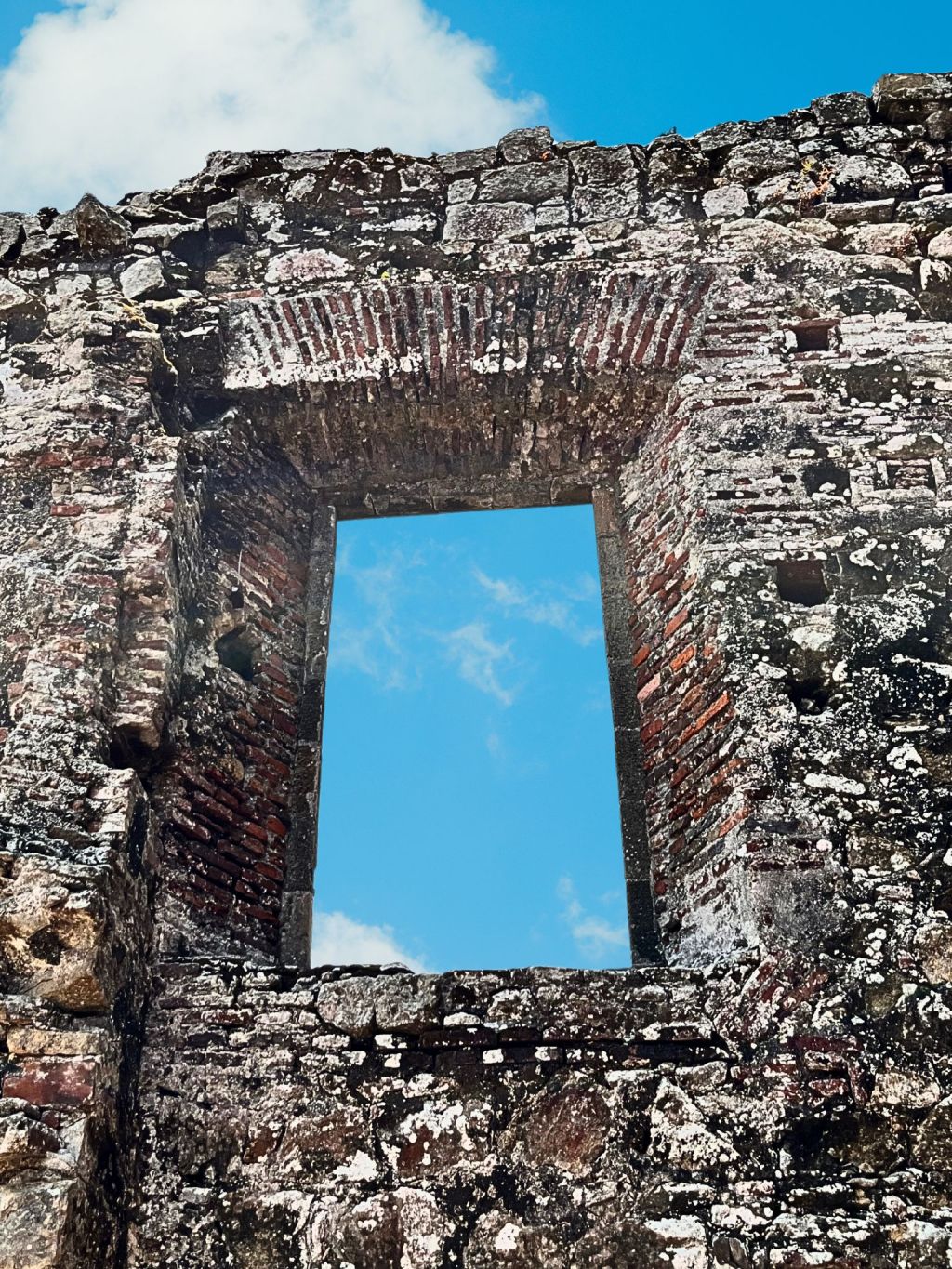
This is where Panama City was first founded. It’s called Panamá Viejo, and it’s about six miles from Casco Viejo—the second version of the city. At the time, its original name was Nuestra Señora de la Asunción de Panamá. A Spanish man named Pedro Arias Dávila founded it on August 15, 1519.
From this spot, expeditions set out to conquer the Inca Empire in South America. It also became one of the most important trade routes in the Americas, especially for transporting silver and gold. But in 1671, the British pirate Henry Morgan attacked the city. He stayed for nearly a month, from January 28 to February 24. To stop him from taking full control, the Spanish governor at the time, Juan Pérez de Guzmán, ordered the city to be destroyed with explosives. What remains today are those ruins.
We visited them on April 2, 2024, just before leaving for Colombia. The heat was intense, but the old cedar, mahogany, oak, and guayacán trees offered much-needed shade. They probably did the same five hundred years ago. We saw the remains of a church, a convent, a monastery, a town hall, and a plaza. It looked like the city had been carefully planned, though we later learned that it was built in a place with very limited access to drinking water. And here’s something curious: after leaving with a large amount of treasure, Morgan went to Jamaica. He was arrested and sent to England to face justice—but instead, King Charles II knighted him. The English court gave him the title Sir Henry Morgan.
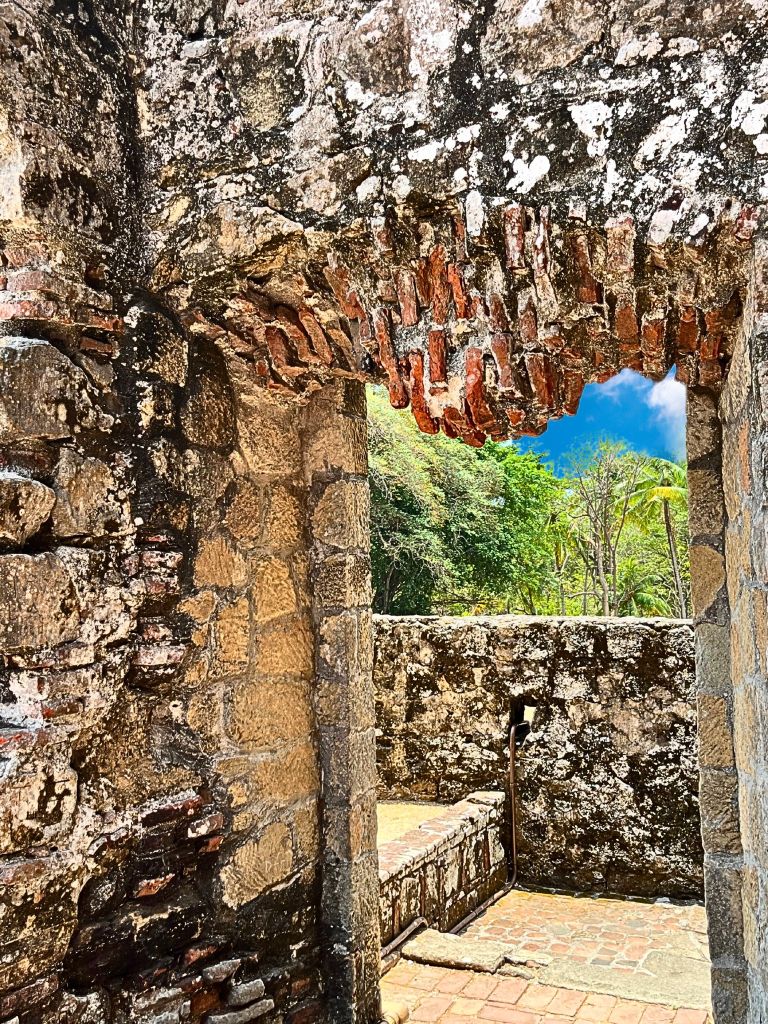
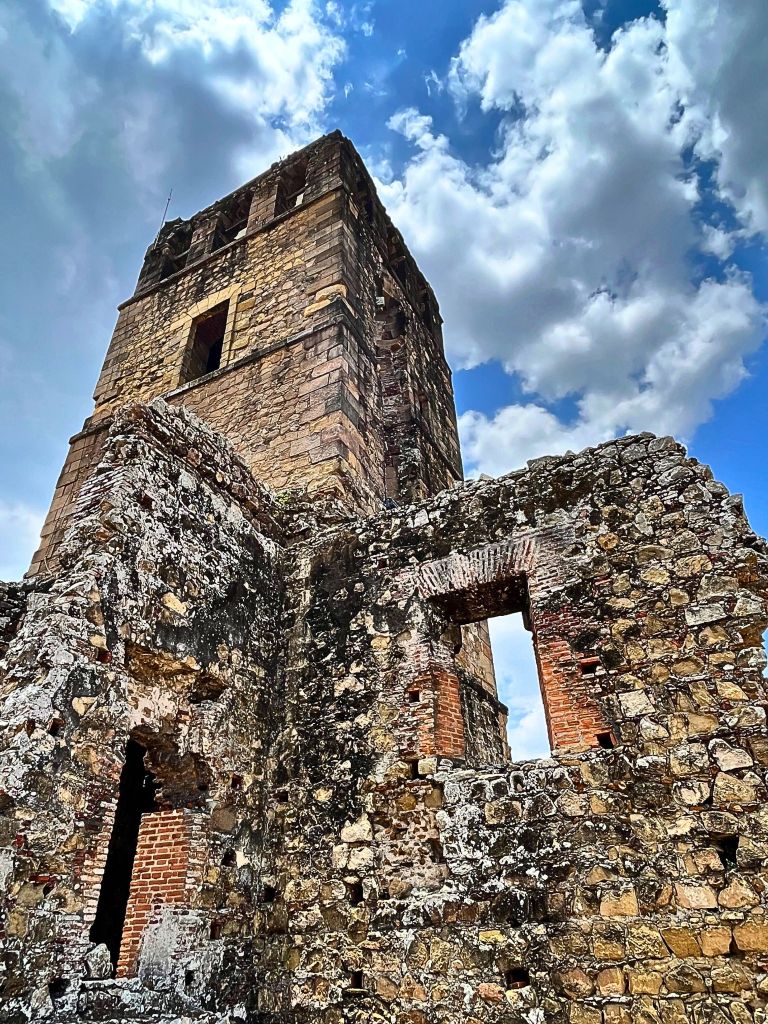

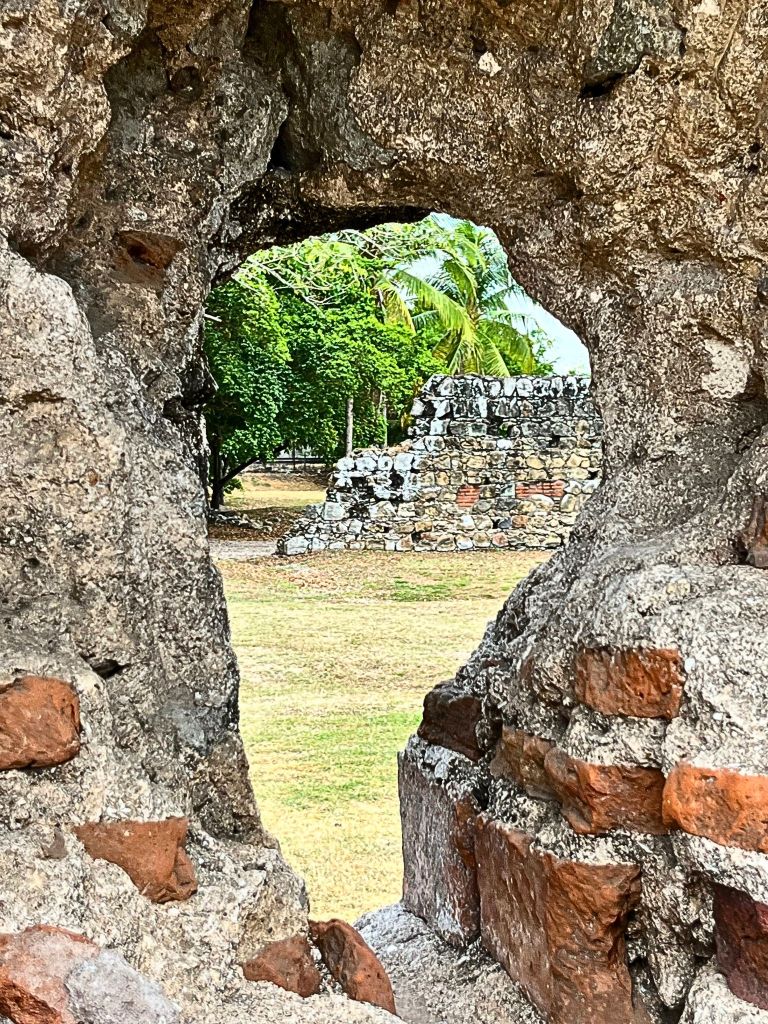
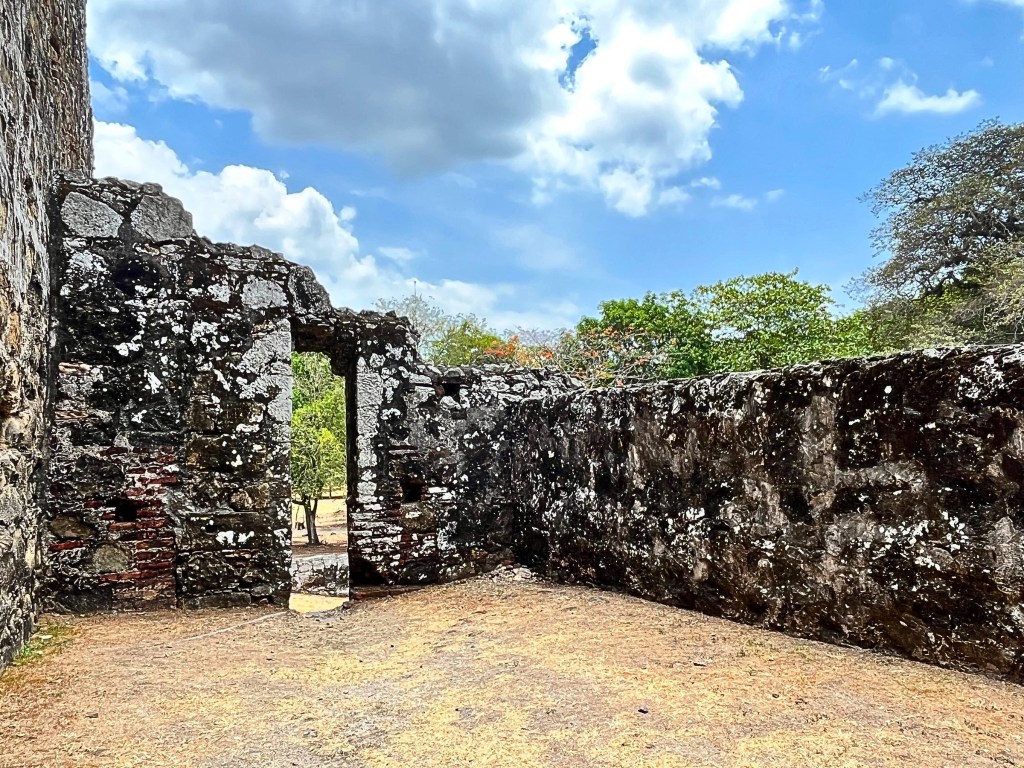

We walked under tall cedar and mahogany trees, grateful for their shade. I wondered if they had once offered the same comfort to settlers, monks, and governors centuries ago.
If this glimpse into Old Panama City has sparked your curiosity, there’s so much more to discover. From its centuries-old ruins to its vibrant modern energy, Panama City offers a journey through time unlike any other. You can visit the historic ruins of Panamá Viejo at Vía Cincuentenario, Panamá, Panama, where the city’s original foundations still whisper their stories. And if you’re drawn to the charm of colonial cities, don’t miss our Cartagena section—just across the Caribbean, another world of color, history, and coastal magic awaits you.
