
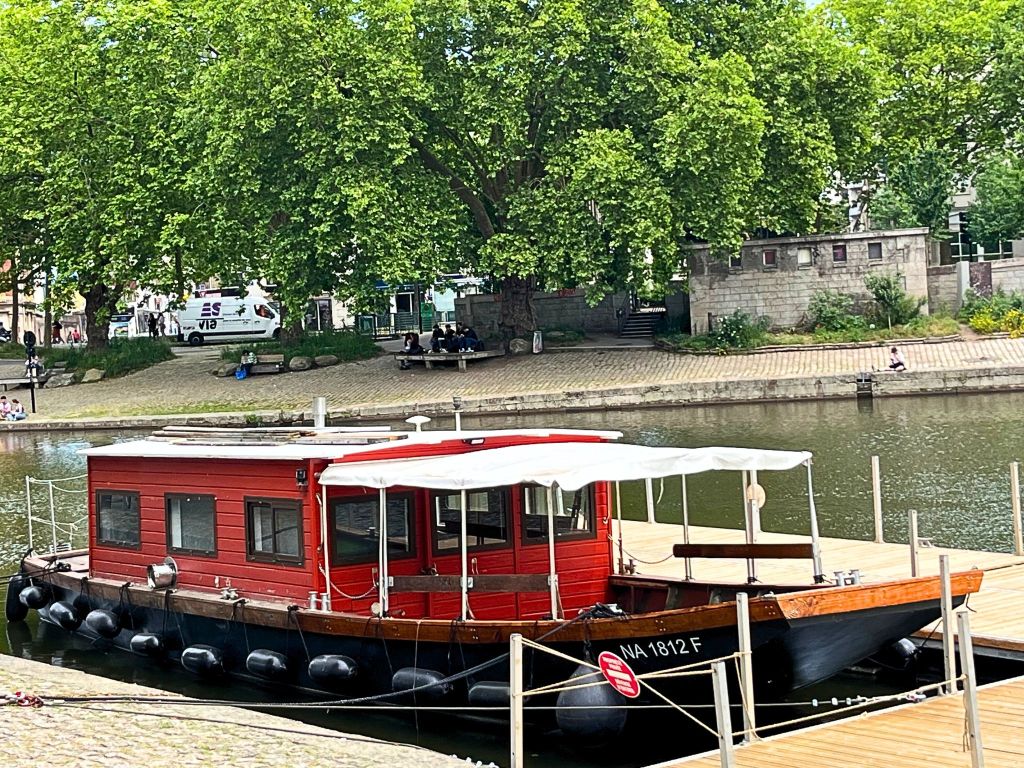
While on my way to visit the Japanese Garden on Île de Versailles in Nantes, I took a quiet path that ran alongside the Erdre River. I hadn’t planned anything special for that short walk—just a simple stroll toward a peaceful garden in one of France’s most walkable cities. But just before reaching the entrance, I noticed a row of boats in Nantes resting along the water’s edge. Some looked lived-in, others almost forgotten, their paint faded and names nearly rubbed off. There was a quiet poetry in how they lay there, half-sheltered by trees, their reflections trembling gently in the rippling surface of the river.
The Erdre, once called “the most beautiful river in France” by King Francis I, has long played a role in Nantes’ life. For centuries, it was a working river—used for transporting wood, wine, and goods between the Loire and inland towns. These weren’t grand ships or tourist attractions—just everyday boats on the Erdre, yet each seemed to carry a silent story. Maybe once used for river fishing in Nantes, maybe for drifting on summer afternoons, or perhaps even tied to someone’s old trade or dream. The stillness of the moment, the hum of the river, the soft creak of wood against wood—it all made this little riverside walk in Nantes feel more meaningful than I expected. The boats became more than boats; they became symbols of waiting, memory, and slow passage.
It struck me that French cities, if we walk them slowly enough, offer these small, unscripted glimpses into their layered pasts. Not through museums or plaques, but through things that remain quietly present—a boat, a bridge, a worn path along a canal. Nantes, France, didn’t need to explain its history here; it simply allowed me to sense it.

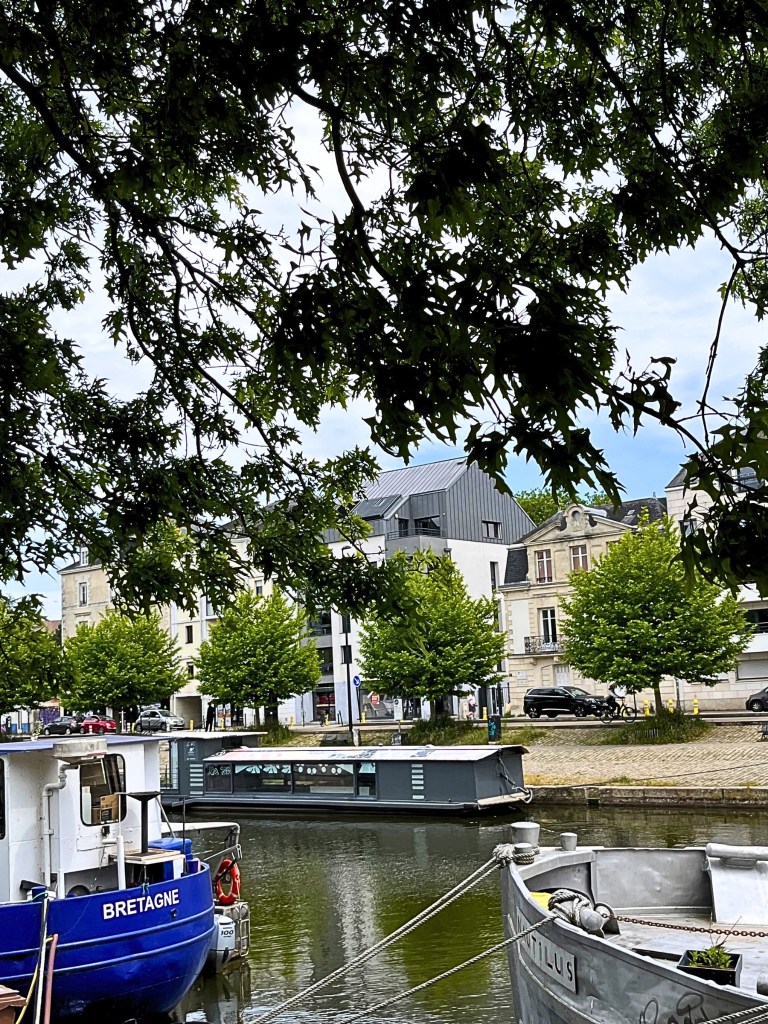
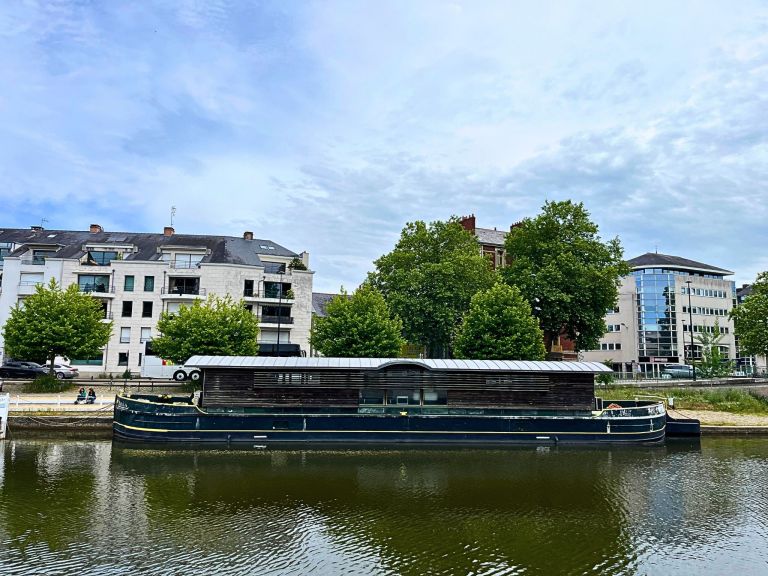
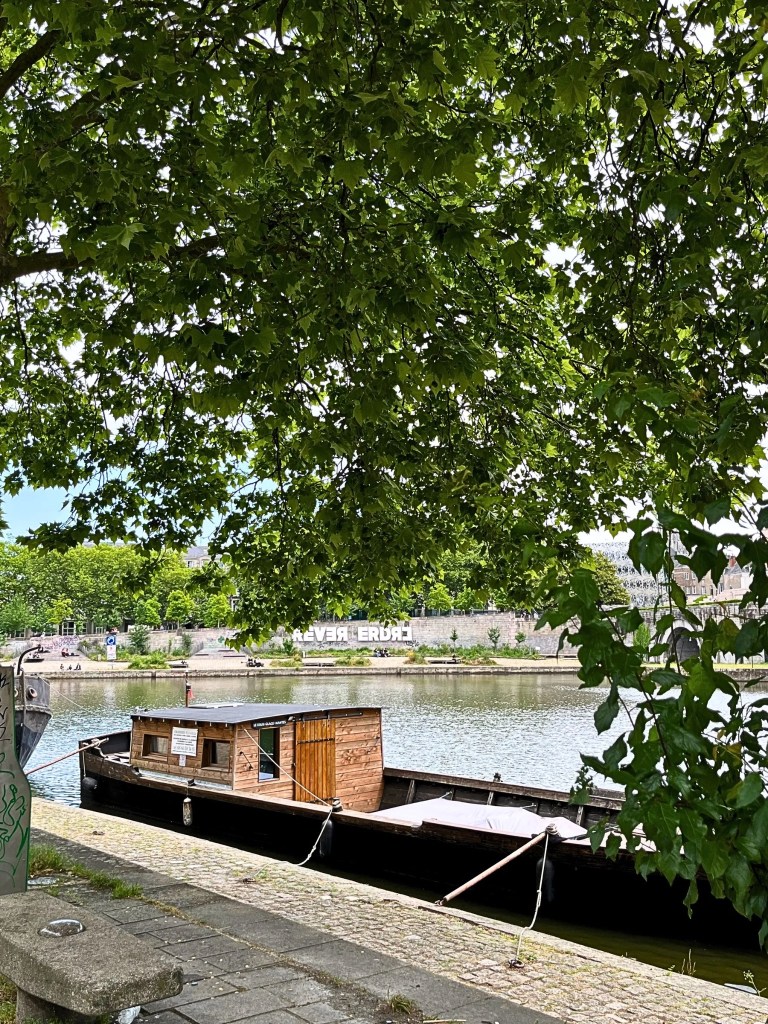


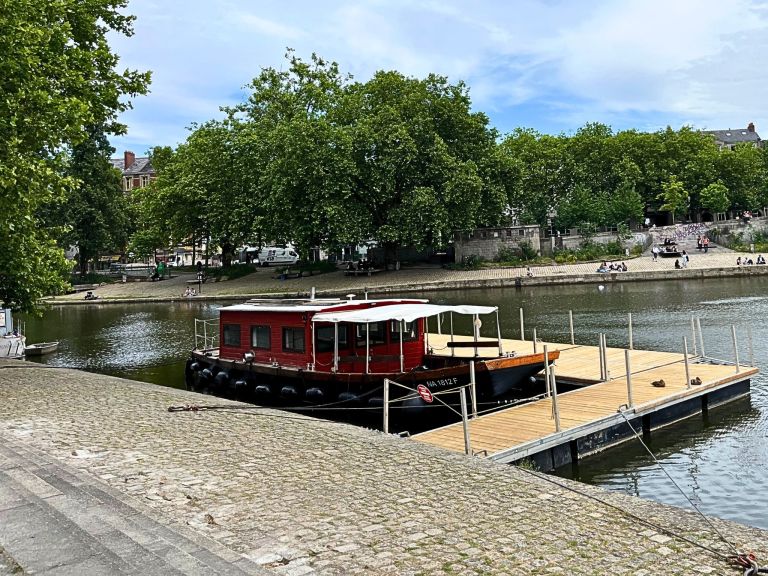
These quiet moments by the river were captured on our last day in Nantes, May 19th, 2025. If they spoke to you, I invite you to explore more of Nantes—and of France—where history lingers softly, waiting to be found on an unhurried walk.
