
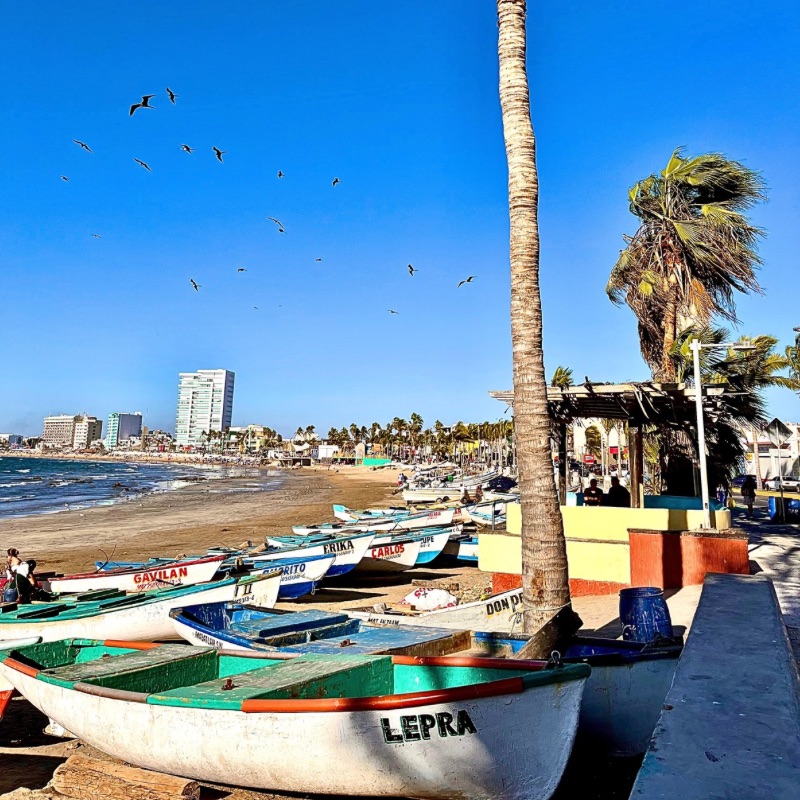
There’s always been something mesmerizing about fishing boats. The child in me imagines being on one, out in the open sea. just the sea and me. Drifting endlessly, gazing at the blue horizon—it must feel like flying.
Whenever I see fishermen, that childhood dream rushes back. Then, I remember The Old Man and the Sea by Ernest Hemingway. I see Santiago in them—the old fisherman forever bound to the ocean, as if by an invisible cord.
I’m certain that the sea ties its fishermen to itself, just as it has tied others who are drawn to it—like my grandfather, the lighthouse keeper, like my father, and like me.

Hands Weathered by Salt and Time: My First Memory of a Fisherman
Through my travels, I’ve learned that small-boat fishing is a lonely trade—just you and the sea. One gives, the other takes. But the giver doesn’t always play fair, and the taker must know how to play the game—and when to step away. Still, they say, the sea always gives back in the end, even when it seems to have beaten you.
Another thing that has always fascinated me is the fishermen’s skin. My first encounter with those dark, cracked hands was as a child. I barely reached the bucket where lobsters fought for their lives before those calloused fingers grabbed them and dropped them into boiling water. That was in Puerto Nuevo, Baja California.
I’ve seen fishermen slice dorado while the fish were still moving in Bahía Concepción. I learned to eat fresh clams straight from the sand in El Requesón. I touched a totoaba in San Felipe. Maybe that’s why I’m not shocked by the sacrifice we make of the sea’s creatures. My father, tied to the ocean like his father before him, used to take us camping along Baja’s beaches.
But that was then, and this is now. Here in Mazatlán, I’ve come to learn about its fishermen and changueras—the street vendors selling seafood so fresh it was still swimming that morning.
Lately, I’ve been visiting them daily, getting shrimp fresh from the sea. Giant ones, medium ones, tiny ones—it’s a luxury I indulge in almost every day here.

Shrimp, Salsa, and Sea Breezes: Mornings in Mazatlán
When I go to the changueras, I take the boardwalk. I follow it past the fishermen’s boats before turning toward the city center. To me, the whole walk is a sweet, blue celebration.
If I go early, I get music too. The first few blocks take me through a park where women exercise to salsa beats. Then, I cross over to the boardwalk, letting the salty breeze wrap around me, watching the fishermen’s boats rock gently in the water.
My excitement stirs when I see that neat row of blue and white boats to my right. I smile, grateful. And for a moment, I’m a child again, floating in that endless rhythm, staring at the blue horizon.
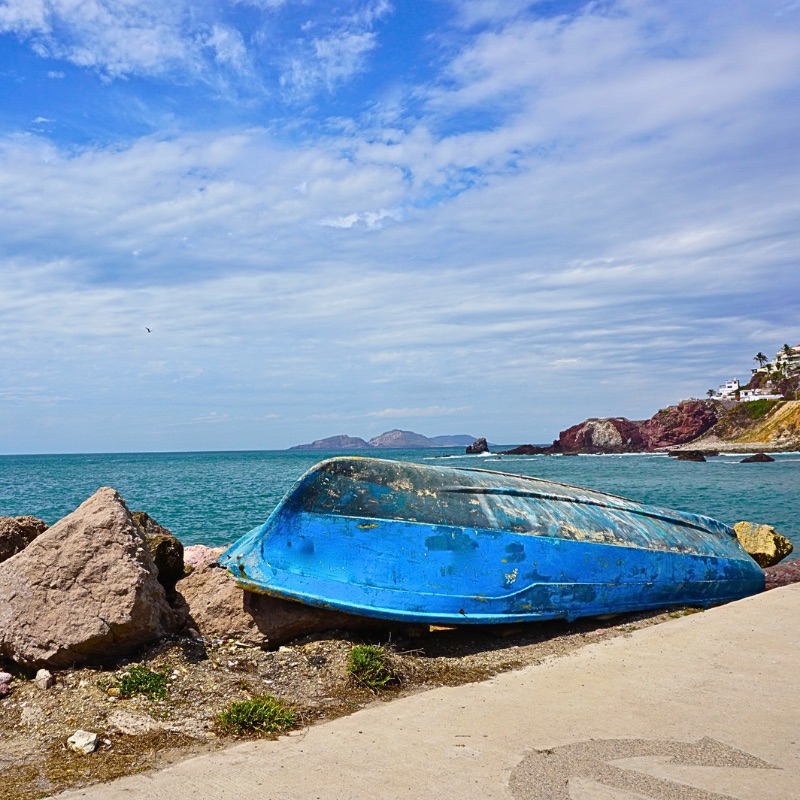
Here in Mazatlán, between the bustle of the changueras and the salty wind dancing along the boardwalk, I feel the sea calling me with a familiar voice. It’s not just today’s ocean—it’s the one from my childhood, the one my father knew, the one my grandfather guarded with his lighthouse.
On my way back, I pass the boardwalk once more. As I walk, my bag of shrimp still smelling of the ocean, I watch those boats come and go again. And in silence, I give thanks—to those rough, weathered hands that pull their living from the water, to the fishermen bound to the sea.
Stay a While Longer
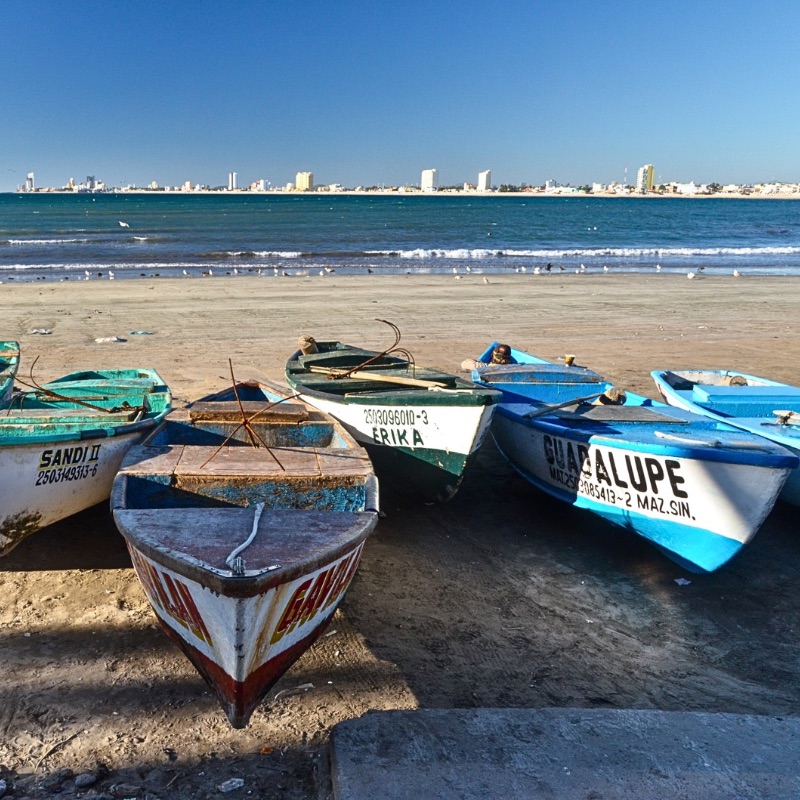
This quiet moment is a memory from our visit to Mazatlán in the spring of 2021—a morning wrapped in salt air, soft light, and the timeless rhythm of sea and shore. If you’re drawn to the soft poetry of places like this—where life slows down and the ordinary becomes beautiful—Mazatlán is just one of many coastal towns that whisper stories at dawn. From the rocky shores of the Pacific to hidden coves on the Caribbean, each fishing village offers its own quiet rituals, sunlit textures, and rhythms of life by the sea. Let this be your invitation to keep exploring—one beach, one morning, one encounter at a time.
